

Blog Posts


What is LEED Certification
You've seen it on our website and almost all of our handouts: 520 Park Apartments are LEED Certified! But what does this mean to you? Most of us understand the concept of LEED which, by the way, stands for Leadership in Energy and Environmental Design but aren't familiar with the specifics of what makes a green building green. Developed in 1994 and constantly evolving, LEED represents green building leadership . It's transforming the way we think about how buildings and communities are designed, constructed, maintained, and operated across the globe. LEED certified buildings save money and resources and have a positive impact on the health of occupants, while promoting renewable, clean energy. During development of 520 Park Avenue , the U.S. Green Building Council (USGBC) paid us a visit and analyzed our plans. Upon inspection and deliberation, we were awarded the Silver Standard for LEED Certification. If you're curious about the process of this system and wonder how they arrived at their conclusions, here's how it all works: The green building certification program recognizes best-in-class building strategies and practices. To receive LEED certification, building projects satisfy prerequisites and earn points (0-100) to achieve different levels of certification. Each rating system groups requirements that address the unique needs of building and project type. There are five rating systems: Building Design and Construction, Interior Design and Construction, Building Operations and Maintenance, Neighborhood Development, and Homes. Once a project team chooses a rating system, they'll use the appropriate credits to guide design and operational decisions. The number of points the project earns determines its level of LEED certification. In order to achieve Silver certification, a building must earn between 50-59 points, which is what 520 Park was able to achieve when we opened our doors in 2014. Energy efficient appliances, windows and green practices set us apart from other apartment communities. We strive to provide you with a home that is clean, comfortable, and most importantly, environmentally responsible.
Read more
Renters Insurance
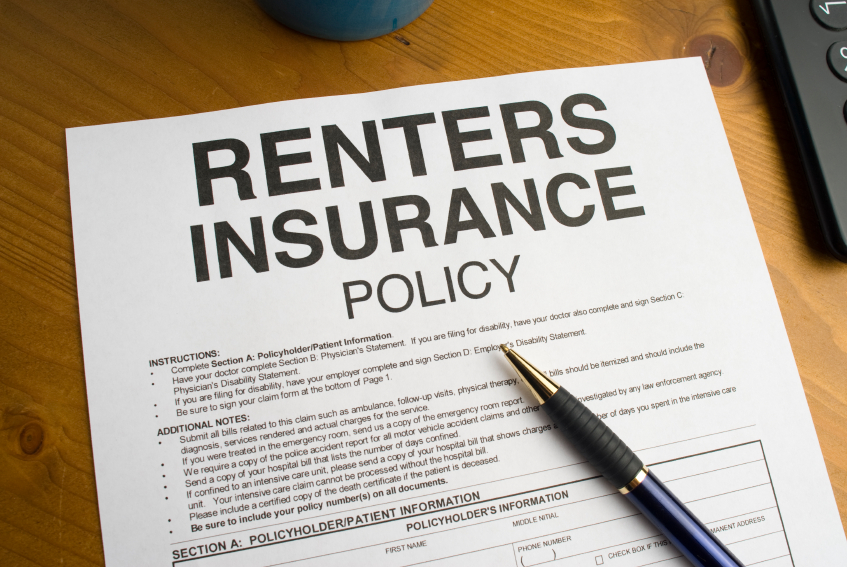
"Do I really need Renter's Insurance?" Many renters assume if you don't own it, you're not responsible for it. In the case of renting an apartment with WPM Real Estate (and hopefully any other real estate management company), you are required to carry Renter's Insurance for not just the apartment itself, but your belongings within the apartment. According to section 43 of your lease, as seen below, you need $100,000 in coverage if you were ever injured, your personal items were damaged, or the apartment is damaged from an incident not caused by the property's inner workings. We do not provide insurance coverage on your property located within the Premises. During the term of this Lease, and any renewal or extension of this Lease, you must, at your expense, maintain renter's form homeowner's insurance coverage on the Premises providing for personal liability (bodily injury and property damage) coverage with a limit of not less than $100,000.00 each occurrence and $5,000.00 in medical payments coverage; and further, providing coverage to keep your personal property on and in the Premises insured for your benefit against loss or damage resulting from broad form named perils on a replacement cost basis. You must provide us with a copy of a certificate of insurance for the policy required by this Section. If you fail to comply with the provisions of this Section 43 of this Lease Agreement, you must pay to us an additional $25.00 per month rent until you purchase and maintain the insurance coverage required by this Section. We will not purchase the insurance for you. Collection of this additional rent will be in addition to, and not in lieu of, any other remedies which we may have as a result of your failure to comply with this Lease provision. You further agree that although you have signed this Lease and remain obligated to pay the rent specified in this Lease and comply with the other terms, covenants, rules and regulations in this Lease, we will not provide you with possession of the Premises until you provide us with a copy of the insurance policy or a certificate documenting that you have obtained the insurance coverage required by this Lease. You should have provided proof of Renter's Insurance before you picked up your keys. If you didn't, shame on your Leasing Consultant! According to the lease, once the policy expires--say, after you've extended your lease for another year--we have the right to charge $25 each month that you neglect to provide a renewed policy. As with any type of insurance, you could pay for renters insurance year after year and never need it. While some renters see it as a waste of money, those who end up needing it say they are grateful they had it. Renters insurance doesn't just take care of your stuff. It protects residents from a few kinds of liability. For example, if someone trips and falls in your apartment, leading to expensive medical bills or even a lawsuit, your policy would provide you with coverage. It could also be a financial lifesaver. Say you left the stove on and caused a fire, any damage caused to the building would be your responsibility. So basically, yeah, you need it. Give our office a call if you have questions or concerns about the lease, and call your insurance provider if you need details on coverage. 520 Park Avenue
Read more

Early Termination
Continuing with our Lease Agreement Series, this week's topic is Early Termination. Sometimes it can't be helped; your company has relocated you, or a family member has fallen ill. We understand, and we want to make the transition as smooth as possible. That's why knowing the process of early termination is the first step in making the move-out process that much easier. So we're here to help! Your lease agreement reads: In the event you wish to terminate this Lease, or any renewal or extension of this Lease, prior to its expiration date, we agree to permit the early termination upon: (A) You giving to us two (2) calendar months prior written notice of your intent to terminate; and (B) You agreeing, in writing, to pay to us an amount equal to two (2) additional month's rent beyond the end of the month in which you elect to terminate this Lease (the "Lease Termination Fee"). This offer is contingent upon you being current in the monthly rental at the time you vacate, and with the Lease Termination Fee being paid prior to the termination date. But what does this mean? According to the statement above, if you find yourself in a situation where you need to move out early and break your lease (even if you just moved in, or just renewed your lease), here's what it's going to take: written notice (which can be an email) two months before the day you plan to move out. So if your company is relocating you effective March 1 st , we need written notice by January 1 st . you'll still be paying market rent (not your discounted rate, if you received one) for those remaining two months, PLUS pay two month's market rent after you move out. This is the fee required for breaking your lease, and all rent/fees are to be paid before moving out. Reading a document before signing it is a very important step of getting a new apartment, but here at 520 Park Avenue we want to be completely transparent and leave no surprises. We're not here to scam you! If you ever have questions over your lease, please stop in the office or set up an appointment to discuss things. We want you to feel comfortable in your new home and trust that we have your best interests at heart.
Read more
Noise and Your Apartment
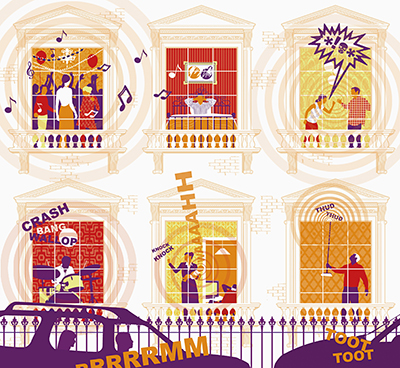
Continuing with our Lease Agreement Series, this week's topic is "Noise." It happens, and sometimes it can't be helped. Sometimes neighbors are just being rude. We understand, and we want to make your life easier. The lease reads: NOISE and BEHAVIOR: You may not make, permit or facilitate any unseemly or disturbing noises or conduct by the Tenant, Tenant's family, employees, agents, guests and/or invitees; nor do, permit or facilitate any illegal, improper, objectionable, undesirable or immoral conduct or obstruct or interfere with the rights, comforts or convenience of other tenants or Landlord. Tenant will not permit to enter the Premises or to remain therein any person of bad or loose character or of improper behavior. Tenant further agrees not to conduct, give or permit vocal or instrumental instruction or practice. This basically states that you and your guests should keep quiet at all times. It also states that you and your guests won't participate in illegal conduct of any kind. While we most certainly agree with the latter, the former leaves much to the imagination. While nothing in the lease specifies types of noises, common courtesy should always be at the forefront of your mind. But what exactly is considered reasonable? Here are some examples: Reasonable Not reasonable A baby crying Yelling or screaming among adults or children Occasionally hosting a few guests Hosting a party larger than 10 guests regularly Vacuuming/cleaning at reasonable hours Hammering, nailing, or other construction Normal to light footsteps Jumping, wrestling, or "rough-housing" Dog barking occasionally Dog barking consistently throughout day/night Outside traffic Loud activity in parking lots or common areas Since we can't cover all forms of noise, it's important you contact the 520 leasing office to discuss the noise(s) you're hearing and at what time of day they're occuring. Every complaint is handled with complete confidence, so you shouldn't resist a complaint for fear of being found out. We always address the issue with the resident without revealing the source. If you are the source of noise complaints, a noise violation letter will be issued. On the third notice, you may face eviction. Please be courteous of your neighbors and remember that you share a space with several other tenants who respect your privacy and comfort, and expect the same from you. Should you ever have questions or concerns, feel free to contact the leasing office!
Read more
Paying Your Rent
Continuing with our Lease Agreement Series, this week's blog will discuss paying your rent. Remember, the lease is important; not only does it serve as a guide for what you can and cannot do, it's the difference between a friendly farewell and possible legal action, or worse, eviction. On page 7, section 30 of your lease reads: PAYMENT OF RENT: Payments may be mailed to our office located at 11433 Cronridge Drive, Owings Mills, Maryland 21117 or at such other address as may be designated by us. You may also pay your rent by enclosing your payment in an envelope and placing the envelope in the Drop Box at 11433 Cronridge Drive, Owings Mills, Maryland 21117. Except as may otherwise be required by law, or by us, all rental payments made by you must be by check or money order. We will convert all paper checks received in payment of rent into electronic items for Automated Clearing House (ACH) funds processing. Such electronic payments will be for the amount indicated on each check and may be withdrawn from your bank account on the same day that your payment is received by us. You understand that a check converted into an electronic item will not be returned to you by your financial institution and will instead appear as an electronic item on your bank statement. If you notify us requesting that your check should not be converted into an electronic item, you must thereafter make all rent payments by cashier's check, certified check or money order. If we cannot post the transaction electronically, we are authorized to present a copy of your check for payment. No personal checks will be accepted after the 5th day of the month, nor will they be accepted if one (1) of your checks, in a twelve (12) month period, is dishonored by your bank. Should we employ a collection agent to institute proceedings for rent and/or repossession of the Premises for non-payment of any installment of rent, and should such rent be due and owing as of the filing of said proceedings, you will pay us the reasonable costs incurred by us in utilizing the services of the collection agent. But what does this mean? For those of you who don't know what an ACH is, it stands for Automated Clearing House, which is a fancy way of processing a physical check to electronic funds. If you prefer to write a check each month, this is to be mailed directly to our corporate office at 11433 Cronridge Dr. Owings Mills, MD 21117, or you can drive there and place it in a drop box. The check is then processed electronically and taken out of your bank account. We only take the exact amount written on your check. Rent is due on the 1 st of every month, but you have until the 5 th before they'll apply the late charge of 5% market rent. After the 5 th at 4:00pm, no personal checks will be accepted for rent, only cashier's checks or money orders. You would be working with the Property Manager at this point, as it they may begin the process of eviction. If we hire a collection agency and proceed with repossession of the apartment, you will be responsible to pay us back for the charges we received from them. But wouldn't you rather avoid all of this nonsense? Pay your rent online! It's quicker, easier, and greener! See next blog for details! 520 Park Avenue
Read more

Your Security Deposit
So you applied for an apartment, and you were approved! Now it's time to read your lease agreement, thoroughly, before signing on that shiny new apartment. But if you're like most of the busy bees buzzing about this city, you didn't have time to read it thoroughly. A glance counts, right? I mean, you touched on the important topics, the rest is just legal jibber-jabber. The lease is important, not only does it serve as a guide for what you can and cannot do, it's the difference between a friendly farewell and possible legal action, or worse, eviction. Let's take a moment to zero in on your lease agreement and discuss it. We'll start with those hot topics you grazed. First, your security deposit. The lease agreement reads: SECURITY DEPOSIT: You acknowledge owing us a Security Deposit to be held by us as security for the faithful performance by you of your obligations under this Lease. We will provide you with a separate receipt acknowledging the amount of Security Deposit paid by you. The Security Deposit, or any portion thereof, may be withheld for unpaid rent, damage due to breach of this Lease or for damage by you or the your family, agents, employees, guests or invitees in excess of ordinary wear and tear to the Premises, common areas, major appliances and furnishings owned by us. It is understood and agreed, however, that even though you paid a Security Deposit, rent must be paid when due, in accordance with the terms of this Lease. You have the right to be present when we inspect the Premises in order to determine if any damage was done to the Premises, if you notify us by certified mail of your intention to move, the date of moving, and your new address. Your notice must be mailed to us at least fifteen (15) days prior to the date of moving. Upon receipt of your notice, we will notify you by certified mail of the time and date when the Premises will be inspected. The date of inspection will occur within five (5) days before or five (5) days after the date of moving as stated in your notice. If we sell or transfer the Premises, we have the right to transfer your Security Deposit to the purchaser, or other transferee, and we will no longer be liable for the return of your Security Deposit. Thereafter, you must look to the purchaser or other transferee for the return of your Security Deposit. This will apply every time your Security Deposit is transferred. Your Security Deposit may not be mortgaged, assigned or encumbered by you without our prior written consent. You have a right to receive, by first class mail, delivered to your last known address, a written list of the charges against your Security Deposit claimed by us and the actual costs, within forty-five (45) days after the termination of your tenancy. We are further obligated to return any unused portion of your Security Deposit, by first class mail, addressed to your last known address within forty-five (45) days after the termination of your tenancy. Our failure to comply with Maryland's Security Deposit Law may result in our being liable to you for a penalty of up to three (3) times the Security Deposit withheld, plus reasonable attorney's fees. But what does this mean? You signed your l ease and paid the deposit, which you expect to get back at the end of your lease. Surely there's nothing that would prevent this from returning to your bank account upon move-out, so you shouldn't have to worry about the logistics of it, right? Unfortunately, that's not always the case. According to the above statement, if you fail to pay rent, damage your apartment (beyond normal wear and tear), or damage any of the common areas, such as your hallway, some, if not all, of your security deposit will be used to pay for the damages or missing rent. What counts as "damage"? See section 17 of your lease. When you move out, it also states that you can be present during time of inspection, to see if any damage was done, but it is not required that you're present. If there are damages, we will send you a list of detailed charges to your new address within 45 days after you move out. We will return the remaining portion, or all of, your security deposit within 45 days as well. If we fail to do our part, we are liable to pay up to three times the amount of your security deposit, plus any reasonable attorney fees. If you transfer your apartment to someone else, the security deposit goes with it. So when you move out, you will not get your security deposit back (we recommend you discuss this with the person taking over your lease). Whenever the transferee moves out of the apartment, they will receive the security deposit back, or will be stuck with any damage charges for the apartment (another good reason to discuss this with the transferee). So there you have it, your security deposit in a nut shell. You should always read a document very carefully before signing it, but here at 520 Park we want to be completely transparent and leave no surprises. We're not here to scam you! If you ever have questions over your lease, please stop in the office or set up an appointment to discuss things. We want you to feel comfortable in your new home and trust that we have your best interests at heart.
Read more